Indian Community Welfare Fund (ICWF): MEA’s Lifeline for Indians Abroad in Distress

Discover how MEA’s Indian Community Welfare Fund (ICWF) safeguards Indians abroad—covering medical, legal, and repatriation assistance worldwide.
Indian Community Welfare Fund (ICWF): MEA’s Lifeline for Indians Abroad in Distress
When an Indian citizen falls into distress abroad — be it due to an accident, job loss, unpaid wages, or legal trouble — one silent hero often steps in: the Indian Community Welfare Fund (ICWF). Managed by the Ministry of External Affairs (MEA), this fund acts as an emergency safety net for millions of Indians living or working overseas.
🧭 What is ICWF?
The Indian Community Welfare Fund (ICWF) was launched by the MEA in 2009 to offer on-site welfare services to Indians in distress abroad. It operates through Indian Embassies and Consulates (called “Missions and Posts”) in foreign countries.
The fund is not a public charity, but a government-supported mechanism to provide emergency assistance to Indian nationals who genuinely need help — especially workers in the Gulf, students abroad, or stranded travellers.
🌍 Why ICWF is Crucial Today
1️⃣ Growing Global Indian Presence
With over 3.5 crore Indians living overseas, many in vulnerable jobs, crises like layoffs, accidents, or employer abuse are not uncommon.
2️⃣ Quick Help During Emergencies
From pandemics to civil wars and natural disasters, the ICWF enables India’s missions to respond swiftly—covering air passages, shelters, or evacuation.
3️⃣ Boosts India’s Global Image
By prioritizing the welfare of Indians abroad, ICWF enhances India’s reputation as a caring and responsible global power.
4️⃣ Rising Relevance in Coming Years
As global migration, overseas employment, and student travel expand, ICWF will play an even bigger humanitarian role in the next decade.
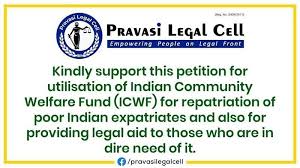
💡 What Assistance Does ICWF Provide?
The ICWF extends financial and logistical help across three main areas:
🆘 1. Assistance to Indians in Distress
- Emergency boarding and lodging for stranded workers and domestic helpers.
- Airfare to return home when migrants lose jobs or are stranded.
- Legal aid for Indians facing minor offences or false accusations.
- Medical care for accident victims or serious illness abroad.
- Transportation of mortal remains or local cremation when families cannot afford the cost.
🪔 2. Community Welfare Activities
- Supporting Indian cultural and language programs abroad.
- Promoting Indian student and youth engagement.
- Organizing labour awareness drives and safety campaigns.
🏛️ 3. Consular Support Enhancement
- Hiring local translators and welfare officers.
- Funding outreach programs to labour camps and detention centres.
- Printing “Know Your Rights” booklets for Indian workers.
🧾 Eligibility & Key Conditions
To maintain transparency, the ICWF works on “means-tested assistance”, meaning only those who genuinely cannot afford help are supported.
| Criteria | Details |
| Who qualifies? | Indian nationals in distress abroad. |
| Excludes: | Persons of Indian Origin (PIOs) and OCI cardholders (except in rare cases). |
| Verification: | Mission verifies income, legal status, and nature of emergency. |
| Record: | Beneficiary details are logged in Mission’s ICWF register and passport. |

🧭 How to Avail ICWF Assistance
If you or someone you know needs help abroad, follow these steps:
1️⃣ Locate the nearest Indian Embassy/Consulate and approach the Welfare Officer or ICWF Nodal Officer.
2️⃣ Submit necessary documents:
- Passport & visa copy
- Proof of distress (medical report, job termination letter, legal notice, etc.)
- Financial proof (to verify need)
3️⃣ Mission evaluates your case and decides the nature and quantum of assistance.
4️⃣ Assistance provided — such as emergency lodging, repatriation ticket, or legal support.
📝 Note: In extreme emergencies (accidents, death, conflict zones), Missions may act first and verify later.
🌟 Real Impact: How ICWF Has Helped Indians
- Gulf countries: Thousands of Indian workers received airfare home after unpaid wages or job loss.
- Ukraine 2022: Missions used ICWF to house and evacuate stranded Indian students.
- COVID-19 pandemic: Provided emergency food, shelter, and evacuation assistance to Indians worldwide.
- Singapore & Malaysia: Used for hospital expenses and burial support for low-income workers.
⚖️ Benefits & Broader Significance
✅ Builds trust between diaspora and the Indian government.
✅ Provides rapid response during crisis.
✅ Ensures dignity in distress—whether through medical aid or final rites.
✅ Strengthens India’s soft power and humanitarian diplomacy.
⚠️ Challenges Ahead
While the ICWF has saved countless lives, it still faces challenges:
- Limited funding at smaller missions.
- Low awareness among migrant workers.
- Paperwork delays in emergencies.
- Difficulty in remote or conflict-ridden countries.
A stronger communication drive, simplified access, and better coordination with state governments can make ICWF even more effective.
🔍 Lesser-Known Facts
💡 Started in 2009, first implemented in Emigration Clearance Required (ECR) countries.
💡 Funded by nominal surcharges on consular services (like passport or visa fees).
💡 Maintains audit and reporting to ensure every rupee is traceable.
💡 Can also be used to hire lawyers or interpreters for jailed Indians abroad.
🧘 Tips for Indians Travelling Abroad
- Always note the contact number of the nearest Indian Mission.
- Register your details on MEA’s “Madad Portal” or the Embassy registration link.
- Carry copies of your passport, work permit, and emergency numbers.
- Inform your family back home about ICWF — they can contact the Mission on your behalf if needed.
- Follow the Embassy’s official social media handles for alerts and welfare updates.
🌈 Conclusion: A Silent Guardian of Indians Abroad
The Indian Community Welfare Fund (ICWF) stands as a quiet yet powerful symbol of India’s commitment to its citizens — no matter where they are. It represents compassion backed by governance, empathy backed by action.
As the Indian footprint spreads further across the globe, the ICWF will continue to be that lifeline in foreign lands, ensuring that every Indian abroad knows — their nation never forgets them.







Post Comment