Sheikh Hasina Death Sentence: Full Story, Charges, Reactions & What Happens Next
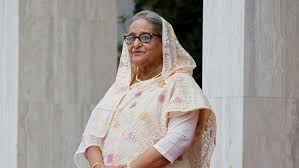
Former Bangladesh PM Sheikh Hasina has been sentenced to death in absentia for crimes against humanity. Learn about the charges, tribunal verdict, 2024 protest crackdown, political reactions, and what this means for Bangladesh’s future.
1. Introduction — A Verdict That Shook South Asia
Bangladesh is once again at the center of global attention after a Dhaka special tribunal sentenced former Prime Minister Sheikh Hasina to death in absentia.
This verdict, linked to crimes against humanity, comes more than a year after the massive student-led protests that toppled her government in 2024.
International media like Al Jazeera and The Guardian have highlighted the intensity of the charges and the political implications of this landmark judgment.
2. What Exactly Did the Tribunal Decide?
According to Al Jazeera, the special tribunal found Sheikh Hasina guilty on three major counts:
✔ 1. Incitement to Violence
She was accused of instructing security forces to “crush” student protests.
✔ 2. Ordering Killings
Multiple incidents from the 2024 crackdown were linked to her office.
✔ 3. Failure to Prevent Atrocities
Despite the massive unrest, the tribunal said she did not act to stop the violence.
These charges fall under crimes against humanity, a rare and severe classification for a former elected leader.
3. Shocking Detail: Use of Drones and Helicopters (The Guardian Insight)
The Guardian report highlighted a dramatic element of the verdict:
The court said Hasina “committed crimes against humanity by ordering the use of drones, helicopters, and lethal weapons” during the 2024 protests.
This statement has sparked widespread debate—supporters call it exaggerated, critics say it reflects reality.
4. Why Was the Trial Conducted in Absentia?
Sheikh Hasina has been living in self-exile since 2024, mostly staying in India.
Because she was not present in Bangladesh during the trial:
- The trial proceeded in absentia (allowed under Bangladeshi law for serious crimes).
- The verdict states she can appeal only if she surrenders or is arrested within 30 days.
This point has also been highlighted by Al Jazeera, raising questions on whether Hasina plans to return or remain abroad indefinitely.
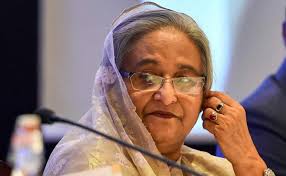
5. Political Reactions: Polarised & Intense
🟥 Awami League’s Response
Hasina’s party has called the verdict “politically motivated and unconstitutional.”
Many leaders are now calling for nationwide shutdowns and mass protests.
🟦 Interim Government’s Stand
The Yunus-led government maintains that:
- The verdict is legally valid,
- The evidence is overwhelming,
- Justice is essential for “New Bangladesh.”
🟩 International Community
Reactions are mixed:
- Human rights groups are questioning the fairness of an in-absentia trial.
- South Asian nations are watching cautiously due to regional security implications.
6. What Does This Mean for Bangladesh’s Future?
The death sentence against a former PM is unprecedented in Bangladesh’s history.
Possible Outcomes:
🔸 1. Increased Political Instability
Anti-verdict protests may escalate, especially from Awami League supporters.
🔸 2. Diplomatic Tension with India
India is currently hosting Hasina.
Bangladesh has not formally requested extradition, but pressure may increase.
🔸 3. Long-term Impact on Elections
With Awami League banned temporarily, Bangladesh’s political structure has shifted dramatically.
🔸 4. Questions About Judicial Neutrality
Some legal experts argue the current atmosphere may not support a fully independent judiciary.
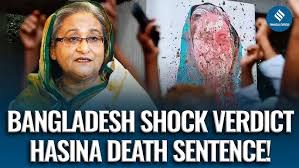
7. Can Sheikh Hasina Appeal the Verdict?
Yes – but the process is strict:
✔ She must return to Bangladesh AND surrender
Only then can she file an appeal.
✔ No remote or proxy appeal is allowed
The tribunal has clearly stated this.
✔ If the 30-day window passes
The verdict becomes permanently recorded.
This detail is critical because it adds pressure on Hasina’s legal and political strategy.
8. Sheikh Hasina’s Official Reaction
Hasina has strongly rejected the verdict, calling it:
- “Fabricated”
- “Politically driven”
- “A sham trial”
She and her son Sajeeb Wazed insist the charges are false and meant to “erase the Awami League from history.”
9. Timeline of Events (Quick Summary)
| Year | Event |
| 2024 | Student revolution topples Hasina’s govt; she leaves Bangladesh |
| 2024–25 | Evidence collected regarding protest killings |
| May 2025 | Awami League suspended and banned from activities |
| July 2025 | Hasina gets 6 months jail (in absentia) for contempt of court |
| Nov 2025 | Death sentence verdict announced |
| Next 30 Days | Appeal window |
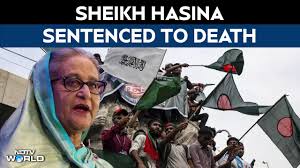
10. Final Analysis — A Defining Moment in Bangladesh’s History
The death sentence of Sheikh Hasina is more than a legal decision; it is a political, historical, and emotional moment for Bangladesh.
Whether seen as long-awaited justice or political retaliation, the verdict will shape:
- Bangladesh’s democracy
- Its human rights standards
- Its relations with neighbors
- And the future of the Awami League
The coming weeks will determine if Hasina fights back legally — or continues her political battle from abroad.
Frequently Asked Questions (FAQ)
1. Why was Sheikh Hasina sentenced to death?
She was found guilty of crimes against humanity related to the 2024 protest crackdown.
2. Is the verdict final?
Not yet — she can appeal only if she returns and surrenders.
3. What happens if she does not return?
The verdict becomes legally final after 30 days.
4. Is the Awami League banned now?
Yes — its activities have been halted under the Anti-Terrorism Act.
5. What is Bangladesh’s political climate now?
Highly tense, with possible shutdowns and protests expected.





Post Comment