India’s Dilemma: Sheikh Hasina’s Death Sentence & New Delhi’s Strategic Response
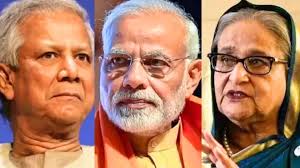
As Bangladesh sentences former PM Sheikh Hasina to death in absentia, India walks a tightrope. Explore New Delhi’s diplomatic balancing act, extradition demands, political pressures, and regional stakes.
1. Introduction — A Delicate Diplomacy
The sentencing of Sheikh Hasina, former Prime Minister of Bangladesh, to death in absentia by a Dhaka tribunal marks a dramatic new chapter in South Asian geopolitics. Hasina, now in self-exile in India, has denounced the verdict as politically driven. New Delhi, meanwhile, has responded cautiously — walking a diplomatic tightrope between legal obligations and regional stability.
2. What Is India Saying — Official Response
- According to the Ministry of External Affairs (MEA), India “has noted the verdict” from Bangladesh’s International Crimes Tribunal.
- In its statement, India reiterated that it remains “committed to the best interests of the people of Bangladesh, including in peace, democracy, inclusion and stability.”
- New Delhi also said it will “always engage constructively with all stakeholders” in Bangladesh.
- Notably, India did not immediately commit to extraditing Hasina, despite Bangladesh demanding her return.
3. Extradition Pressure from Dhaka
- Bangladesh’s interim government has urged India to “immediately hand over” Hasina, citing an existing bilateral extradition treaty.
- Dhaka’s government framed it as a “mandatory obligation,” arguing that sheltering someone convicted of crimes against humanity would be “an unfriendly act.”
- However, experts and analysts quoted by Al Jazeera argue that India is highly unlikely to extradite her, given the political implications.
4. Indian Domestic Reactions & Political Voices
- Shashi Tharoor, Congress MP, publicly criticized the verdict, saying he does not believe in the death penalty — whether domestic or abroad.
- Tharoor also pointed out the procedural challenge:
“A trial in absentia where somebody doesn’t get a chance to defend themselves … and then you declare a death penalty … it seems … it’s not appropriate … it’s a very troubling development.”
- Such voices reflect broader Indian concerns about human rights, fairness, and the implications of backing or rejecting Dhaka’s judicial process.

5. How India’s Strategic Interests Are Playing Out
5.1 Maintaining Regional Stability
India’s response underscores a desire to preserve stability in Bangladesh, which is geopolitically critical. Any major upheaval — protests, shutdowns, or unrest — could spill over, affecting border security, trade, and cooperation.
5.2 Balancing Political Legitimacy
By not immediately extraditing Hasina, India avoids being seen as complicit in a verdict that Hasina and many supporters call politically motivated. Extradition could be perceived as siding with Dhaka’s interim government against the ousted Awami League.
5.3 Humanitarian and Rights Considerations
India’s emphasis on “peace, democracy, inclusion” suggests that its policy is not purely transactional but also considers human rights optics. Given the severity of the sentence, India’s decision will be scrutinized internationally.
5.4 Geopolitical Competition
Bangladesh’s current interim government under Muhammad Yunus is navigating a new phase. India may be cautious about undermining its long-term influence, especially as regional dynamics (including relations with China) shift.
6. Risks & Challenges for India
- Diplomatic Backlash: If India refuses to extradite, Dhaka may accuse it of interference or harboring a fugitive, straining bilateral ties.
- Security Risk: Ongoing political instability in Bangladesh could lead to refugee flows or cross-border tensions.
- Domestic Criticism: Opposition voices in India (like Tharoor) may raise moral and legal questions; human rights groups may also weigh in.
- International Implications: How India handles this could affect its image globally — especially among nations watching its role in regional justice and democracy.
7. Possible Scenarios Ahead
- India Denies Extradition
- Hasina remains in India.
- Dhaka escalates diplomatic pressure.
- India could offer conditional asylum, but risk fraying ties.
- India Extradites Hasina
- Highly unlikely, given current statements — but if it happens, it could lead to a major diplomatic shift.
- Could lead to domestic and international debate on justice vs sovereignty.
- Some Middle Path
- India may push for a fair retrial or appeal, using diplomatic channels.
- It could also broker reconciliation talks or a phased return, to avoid destabilising Bangladesh.
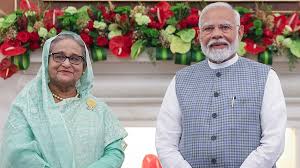
8. Why India’s Stand Matters — Not Just for Dhaka
- Regional Power Dynamics: Bangladesh is a key neighbor — any major move impacts India’s security, economy, and influence in South Asia.
- Democratic Credibility: India’s handling of this case will be watched for its commitment to democratic norms and human rights.
- Precedent Setting: How New Delhi responds could set precedent for future asylum and extradition cases in the region.
- Geopolitical Leverage: India’s policy could either strengthen or weaken its leverage in Bangladesh, depending on how this plays out.
9. Conclusion — India’s Tightrope Walk
India’s reaction to Sheikh Hasina’s death sentence is a carefully calibrated balance of diplomacy, strategic interest, and moral concern. While Dhaka demands extradition, New Delhi is signaling restraint and a long-term engagement strategy rather than a knee-jerk response.
For India, the challenge is clear: how to uphold regional stability and democratic values without compromising its own strategic autonomy.
FAQs
Q1: Does India have to extradite Hasina?
Not necessarily. While an extradition treaty exists, the political, diplomatic, and legal costs are very high. India’s statement shows it is not rushing into handing her over.
Q2: Can Hasina appeal the death sentence from India?
Yes — in principle she can appeal, but this would require legal mechanisms in Bangladesh. India’s role would likely be diplomatic rather than judicial.
Q3: What do Indian politicians say about this?
Some, like Shashi Tharoor, strongly oppose the death sentence on moral grounds, especially given the in-absentia nature of the trial.
Q4: Could this decision strain India-Bangladesh relations permanently?
It’s possible. Extradition refusal or prolonged diplomatic friction could increase instability in bilateral ties — but India seems ready to play a long game rather than escalate immediately.
Q5: Why is this important for South Asia geopolitics?
Because Bangladesh is a key neighbor and ally. India’s handling of this case could influence regional alignments, its global image, and its ability to engage on big issues like security, trade, and climate.






Post Comment