Never Give Paracetamol to a Cat — Here’s Why This Common Medicine Can Be Deadly
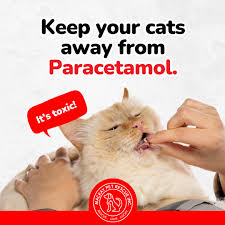
Never give paracetamol to a cat — even a tiny dose can be deadly. Learn why paracetamol is toxic for cats, symptoms of poisoning, treatment & safe alternatives.
“Do not give paracetamol to a cat or she will die” — this warning may sound dramatic, but it is scientifically true. Many pet owners mistakenly believe that human medicines are safe for animals in smaller doses. But when it comes to cats, paracetamol (also known as acetaminophen) is one of the deadliest household toxins.
This blog explains why paracetamol is highly poisonous for cats, the symptoms of toxicity, what to do in an emergency, and safer alternatives recommended by veterinarians.
What Is Paracetamol and Why Is It Dangerous for Cats?
Paracetamol is a common over-the-counter medicine used by humans for fever and pain relief. However, a cat’s body is biologically different from that of humans and dogs.
Cats Cannot Metabolize Paracetamol
Cats lack a crucial liver enzyme called glucuronyl transferase, which is responsible for breaking down paracetamol.
Because of this:
- Even a tiny dose (50–100 mg) — less than ¼ of a tablet — can cause fatal toxicity.
- The drug rapidly damages the liver.
- It converts hemoglobin into methemoglobin, which cannot carry oxygen properly.
This leads to oxygen starvation, organ failure, and death if not treated immediately.
Symptoms of Paracetamol Poisoning in Cats
Signs usually appear within a few hours and worsen quickly.
Common Early Symptoms
- Drooling
- Vomiting
- Lethargy
- Rapid breathing
Severe Symptoms (Life-Threatening)
- Swelling of the face, paws, and limbs
- Brown, blue, or purple gums
- Difficulty breathing / gasping
- Dark urine
- Hypothermia
- Liver failure
If any of these signs appear, it is a veterinary emergency.
How Much Paracetamol Is Toxic for Cats?
The toxic dose for cats is as low as 10 mg/kg.
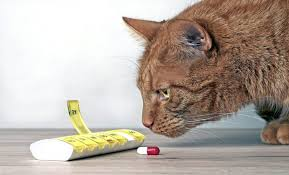
For most cats, a single human tablet (500 mg) is enough to cause irreversible damage.
This makes paracetamol poisoning one of the most dangerous household exposures for cats.
What To Do If a Cat Accidentally Consumes Paracetamol
Act fast — every minute counts.
- Call a veterinarian immediately
Do not wait for symptoms to worsen. - Do not try home remedies
Activated charcoal or inducing vomiting can make things worse without proper guidance. - Take the tablet strip or bottle with you
This helps the vet understand the exact composition and dosage.
Emergency Treatment (Only a Vet Can Provide)
- IV fluids
- Oxygen therapy
- Antidote: N-acetylcysteine (NAC)
- Liver protectants
- Continuous monitoring
Survival chances are highest if treatment begins within 2–3 hours.
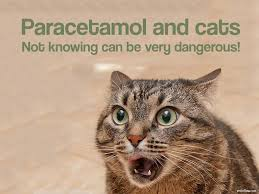
Why Pet Owners Make This Mistake
Many cat parents unknowingly give paracetamol because:
- They assume “human medicines must be safe.”
- They compare cats with babies or small dogs.
- They try to treat pain or fever at home.
- Internet misinformation leads to confusion.
However, cats have completely different metabolic pathways, which makes certain human medications extremely harmful.
Safe Alternatives to Paracetamol for Cats
Never medicate a cat without a veterinarian’s approval.
Common vet-approved options include:
- Meloxicam (specific feline dosage only)
- Robenacoxib
- Buprenorphine
- Gabapentin
(Only after a vet examines the cat)
Cats are sensitive creatures, and even safe medicines require precise dosage.
How to Prevent Accidental Paracetamol Poisoning
- Keep all medicines in closed cabinets.
- Never leave tablets on bedside tables or sofas.
- Inform family members and domestic helpers.
- Use only veterinary prescriptions for any pain or fever.
- Store pet medicines separately from human medicines.
Your cat’s safety depends on awareness and precaution.
Conclusion
Paracetamol is a life-saving medicine for humans — but a silent killer for cats.
Giving even a small quantity can lead to liver failure, oxygen deprivation, and death.
The golden rule every cat parent must follow is:
“Never give human medicines to cats — always consult a veterinarian.”
By spreading awareness, you can protect not only your own pet but also help others avoid this common and deadly mistake.
For More Such Amazing Content Please Visit : https://newseeker.insightsphere.in/







Post Comment