Cyclone Ditwah 2025: A Comprehensive Analysis of Its Impact, Aftermath and Lessons
Cyclone Ditwah, Cyclone Ditwah 2025, Ditwah impact, South India cyclone, Sri Lanka floods 2025, IMD warnings, Tamil Nadu flooding, Andhra Pradesh heavy rain, disaster management, cyclone safety tips, climate change cyclones, Bay of Bengal storm, coastal disaster preparedness.
1. What is Cyclone Ditwah — Formation & Meteorological Background
- Genesis
4
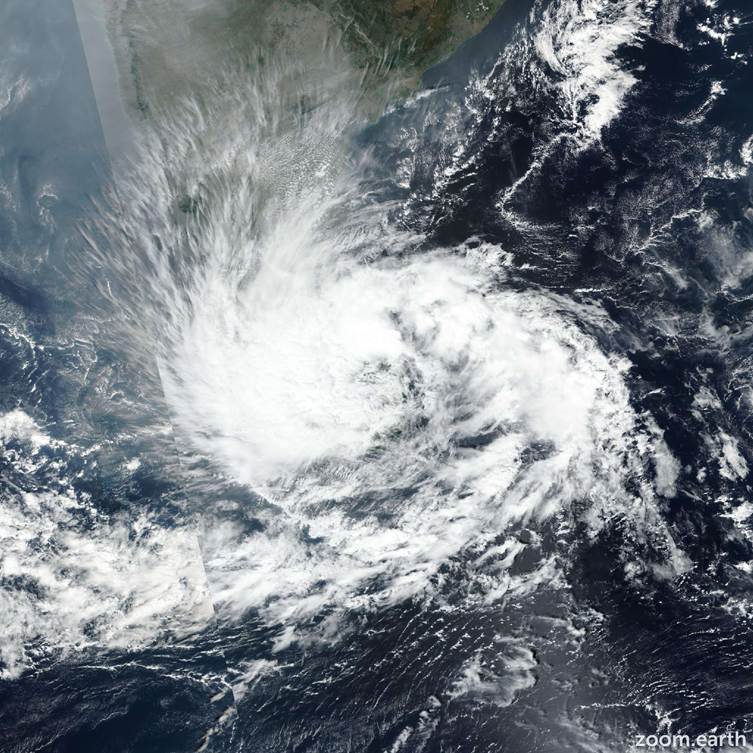
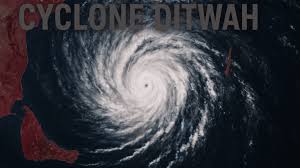
- The storm that became Cyclone Ditwah originated as a well-marked low-pressure area over the southwest Bay of Bengal, near the eastern coast of Sri Lanka.
- On 26 November 2025, the system formed and quickly intensified — first into a deep depression and soon after into a cyclonic storm, acquiring the name “Ditwah.”
- The name “Ditwah” was proposed by Yemen, referring to a lagoon (Detwah Lagoon) on Socotra’s northwest coast.
- Meteorological Characteristics
- At peak, Cyclone Ditwah had sustained surface winds around 65–75 km/h, with gusts reaching up to 85–90 km/h as it approached coastal regions.
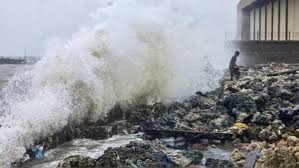
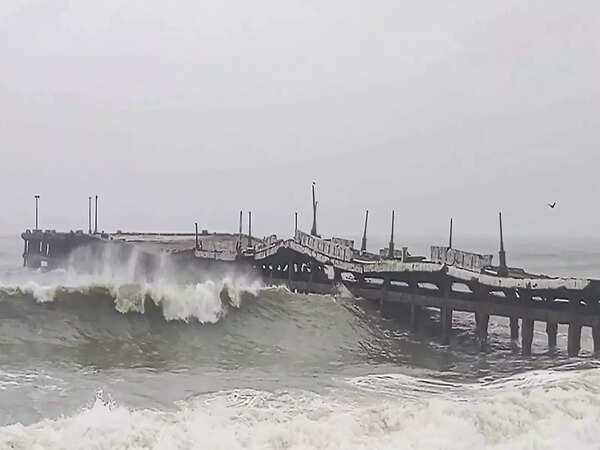
- Sea conditions worsened, with rough to very rough seas expected, and waves potentially reaching 4–5 meters, making maritime activity extremely hazardous.
- Meteorological forecasts projected heavy to extremely heavy rainfall over affected coastal and adjoining districts — triggering red and orange alerts across numerous regions.
- Storm Track & Progression
- After forming near Sri Lanka, Ditwah made landfall over Sri Lanka first, causing devastating floods and landslides.
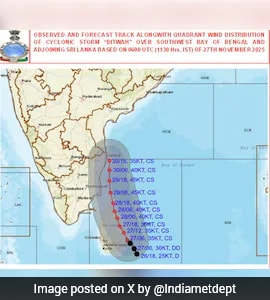
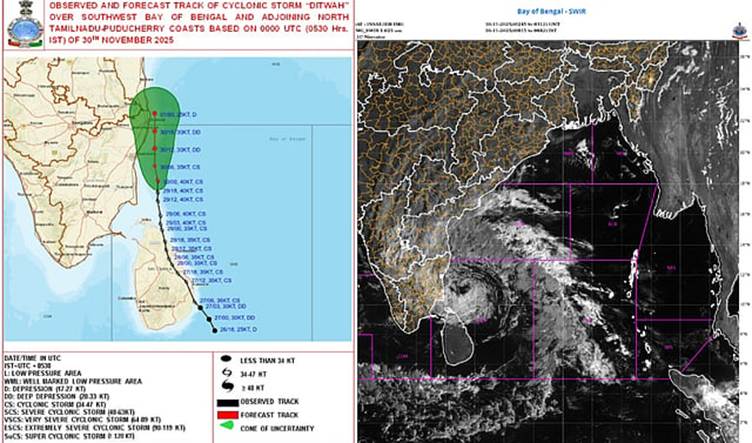
- Post landfall, it moved into the Bay of Bengal, re-intensified, and began tracking north-northwest — skirting parallel to the eastern coast of India (particularly Tamil Nadu, Puducherry, and southern Andhra Pradesh).
- By 30 November 2025, the cyclone was close to the Indian coast. Although a direct landfall became unlikely, its proximity caused heavy rains, strong winds, rough seas, and widespread disruption.
2. Impact on Sri Lanka — Devastation and Disaster
- Scale of Disaster
- Sri Lanka bore the first and worst brunt of Cyclone Ditwah. Torrential rains and landslides triggered by the storm ravaged large portions of the island — particularly the eastern and central hill regions.
- According to official tallies (as per latest updates), over 123 people have died, with 130+ missing.
- Tens of thousands of people were displaced: nearly 44,000 forced into temporary state-run welfare shelters and relief camps.
- Landslides & Flooding — Widespread Destruction
- Massive floods submerged homes, fields, essential infrastructure; rivers burst banks; and landslides buried entire villages.
- In one tragic incident in the village of Gangoda, several lives were lost due to a landslide burial.
- Transportation, roads, and basic utilities — all severely impacted. Rescue teams, including air-assets, had to be deployed to reach remote, cut-off areas.
- Relief & Humanitarian Response
- The government declared a state of emergency in the worst-hit zones. The army and other security forces mobilised rescue teams — deploying helicopters (e.g. Mil Mi-17), surveillance aircraft, naval boats, and rescue vehicles for airlifting stranded people and providing aid.
- International attention poured in; several countries and agencies offered aid and humanitarian support. Meanwhile, efforts are ongoing to locate the missing, clear debris, and restore basic services.
- After-effects & Long-Term Concerns
- The scale of destruction has raised grave concerns about long-term displacement, loss of livelihoods (especially in agriculture, small-scale farming, fishing), infrastructural breakdown, and psychological trauma among survivors.
- Environmental damage — soil erosion, deforestation, landslide-prone zones — will need careful rehabilitation and ecological rebuilding.
- The disaster underscores how fragile island nations and coastal zones remain in face of tropic storms, especially under changing climate conditions.
3. Impact on Southern India — Tamil Nadu, Puducherry & Andhra Pradesh
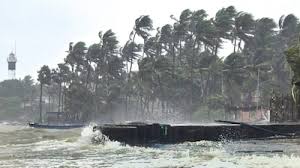
While Sri Lanka suffered the worst overall, southern India — especially coastal Tamil Nadu and neighbouring areas — experienced significant disruption due to Cyclone Ditwah’s proximity and associated weather phenomena.
- Red Alerts, Widespread Rain & Flooding Risk
- The India Meteorological Department (IMD) issued red alerts for delta and coastal districts of Tamil Nadu (e.g. Cuddalore, Nagapattinam, Mayiladuthurai, Villupuram, etc.), and parts of Puducherry and south Andhra Pradesh.
- An “orange alert” was declared for additional districts including Chennai, Chengalpattu, Kancheepuram, Tiruvallur, Ranipet, etc.
- Forecasts warned of extremely heavy rainfall — with some delta regions likely to receive over 20 cm (200 mm) in a short span, raising fears of massive flooding.
- Transport Disruption: Flights, Trains & Sea Activities Affected
- Air travel was heavily disrupted. Over 50 flights from Chennai airport were cancelled.
- Rail services were also impacted — several trains were cancelled or terminated prematurely; some suspensions were imposed on routes including to pilgrimage and island destinations.
- Rough seas and high waves made fishing and other maritime activities dangerous. Fishermen were strictly advised not to venture out until conditions improve.
- Rainfall, Flooding & Agricultural Losses
- In coastal districts like Nagapattinam, rainfall amounts as high as 25 cm in 24 hours were recorded — triggering immediate waterlogging and flooding.
- Delta regions — including Thiruvarur, Mayiladuthurai, Thanjavur — saw large portions of farmland submerged or waterlogged. Overall, around 57,000 hectares of farmland suffered damage.
- Salt pans, especially near coastal zones — e.g. salt producers near Vedaranyam — were inundated, affecting livelihoods dependent on salt harvesting. Nearly 9,000 acres of salt pans reportedly got flooded.
- Casualties, Livestock & Infrastructure Damage
- According to official government updates: 3 people died in Tamil Nadu due to rain-related incidents (wall collapses and electrocution).
- Livestock loss: Approximately 149 cattle reported dead in affected districts.
- Thousands of huts and rural homes were damaged. Several villages saw roof damage, partial collapse due to strong winds or floodwaters.
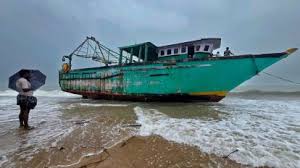
- In coastal zones, erosion, choppy seas, and damage to fishing boats were reported — especially in fishing hamlets on the southern coast near Mandapam and surrounding regions.
- Disruption of Daily Life & Government Response
- Schools and colleges were shut in many districts; exam schedules suspended.
- Rescue teams from the National Disaster Response Force (NDRF) and state disaster management units were deployed for evacuations, relief, and safety operations.
- Local administrations urged residents — especially those in low-lying or vulnerable areas — to stay indoors, secure property, avoid coastal zones, and keep essential supplies ready (water, dry food, medicines, etc.).
- Economic Losses & Long-Term Impact
- The damage to agriculture (paddy fields, salt pans) and livestock represents a major economic blow — likely to affect incomes of farmers, salt producers, fishing communities, and daily wage workers.
- Infrastructure losses (roads, fishing boats, huts, homes) will require relief, rebuilding, and government intervention to restore normalcy.
- Long-term displacement, livelihood disruption, and stress on coastal and delta communities — especially small farmers and traditional occupations — may increase vulnerability.
4. Why Cyclone Ditwah Matters — Bigger Picture: Climate, Preparedness and Coastal Vulnerability
- Climate Change & Intensifying Cyclones
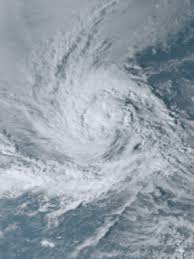
- The rapid formation and intensification of Cyclone Ditwah underscore how climate change may be increasing the frequency and ferocity of cyclones in the Indian Ocean and Bay of Bengal. Warmer seas and more moisture-laden air — conditions conducive for stronger storms — are becoming more common.
- Coastal and island nations — like Sri Lanka — and low-lying coastal zones in India are becoming increasingly vulnerable to such cyclones. The scale of destruction, displacement, and loss today may only worsen over time if preventive measures aren’t scaled up.
- Importance of Early Warning Systems & Disaster Preparedness
- The role of meteorological agencies (like IMD) becomes critical: timely alerts (red/orange), clear communication, wind and rainfall forecasts, and direct public advisories can save lives.
- Infrastructure and disaster-resilient planning: better housing standards, flood-resistant structures, stronger embankments, robust drainage systems, and coastal protections — all become vital.
- Community awareness: Equipping coastal communities with knowledge of cyclone safety — evacuation procedures, emergency kits, and avoidance of risky zones — can drastically reduce casualties and losses.
- Need for Long-Term Rehabilitation & Climate-Resilient Policy
- Relief operations — immediate aid is essential, but long-term rehabilitation, rebuilding homes, restoring livelihoods (farming, salt pans, fishing), and psychological support matter.
- Policy interventions: crop insurance, compensation schemes for farmers and salt-pan workers, infrastructure grants for coastal and rural rebuilding.
- Sustainable development: integrating coastal ecosystem conservation (mangroves, wetlands), erosion control, and sustainable land-use planning to minimize impact of future cyclones.
5. Lessons Learned & Safety Guidelines — What Individuals and Communities Should Know
Based on the unfolding events of Cyclone Ditwah, here are essential lessons and safety guidelines communities — especially in coastal and cyclone-prone zones — should follow:
- Stay Updated & Heed Official Alerts: Respect red/orange alerts from meteorological agencies. Do not assume the cyclone “won’t hit.” Even a nearby cyclone can cause heavy rain, wind and flooding.
- Avoid Coastal Areas & Rough Sea: Fishermen and coastal residents should avoid venturing into the sea until authorities declare it safe. Sea conditions may remain rough even if the storm’s core is away.
- Prepare Emergency Kits: Keep essentials — clean drinking water, dry food, medicines, torch/lanterns, power banks, important documents — ready.
- Secure Homes & Property: Fasten doors/windows, clear loose objects, uproot or secure trees near homes, ensure drainage paths are open to avoid waterlogging.
- Have Evacuation Plans: If residing in low-lying or flood-prone zones — plan evacuation routes, know nearest shelters, and maintain contact with local disaster-management authorities.
- Post-Cyclone Health & Hygiene: Floodwaters often carry disease risk — ensure clean water, avoid contaminated water, take care of sanitation, and follow medical advisories.
- Support Community Resilience: Post-disaster, participate in community clean-up, rebuilding; help vulnerable neighbours — old people, children, disabled, marginalised.
6. How Ditwah Changes the Way We View Cyclones — Implications for the Future
The devastation by Cyclone Ditwah (in both Sri Lanka and South India) is a grim reminder that tropical cyclones remain one of the gravest natural disasters — and their impact is magnified by climate change, population density, vulnerable coastal settlements, and fragile infrastructure.
- Amplified Vulnerability of Coastal and Island Regions — island nations like Sri Lanka, and Indian coastal zones (Tamil Nadu, Andhra Pradesh, Puducherry) are at high risk. Cyclone Ditwah shows how a single storm can cause a cross-border disaster.
- Need for Integrated Regional Disaster Response & Relief Cooperation — when disasters transcend national boundaries, cross-nation cooperation becomes essential (relief, rescue, resource sharing, early-warning coordination). Ditwah has already triggered such cooperation: for example, relief efforts from neighbouring countries for Sri Lanka, and coordinated disaster response.
- Long-term Climate Adaptation Strategy is Non-Negotiable — from developing cyclone-resistant infrastructure, coastal afforestation (e.g. mangroves), resilient housing, to implementing early-warning systems, disaster education, and sustainable coastal economy — the need is urgent.
- Awareness & Community Preparedness Matters More Than Ever — education, awareness, and proactive preparedness can dramatically reduce loss of life and property. Cyclone Ditwah could — and should — serve as a wake-up call.
7. What Next — Outlook, What to Watch, and Hope
As of now, Cyclone Ditwah is weakening after skirting India’s eastern coast. But the aftermath — in terms of loss, displacement, damage — is still unfolding. Here’s what to watch next:
- Ongoing rescue and relief operations in Sri Lanka — efforts to find missing, support displaced people, rehabilitate flood-hit zones.
- Restoration of infrastructure in southern India — roads, salt-pans, farmland drainage, rebuilding coastal fishing hamlets.
- Government and NGOs rolling out compensation schemes, aid packages, rehabilitation support for affected farmers, salt-pan workers, fishing communities.
- Expert analysis on long-term climate and disaster management strategy — evaluating whether cyclones like Ditwah are becoming more frequent/severe, and how coastal/low-lying regions need to prepare.
- Community and civil-society involvement in rebuilding and resilience — local awareness, disaster education, relief camps, rebuilding importantly with climate-resilient design.
Despite the destruction, there is hope — hope that lessons learned from Ditwah will lead to robust action, better preparedness, stronger policies, and increased resilience.
8. Conclusion
Cyclone Ditwah 2025 will be remembered as one of the deadliest and most destructive tropical storms in recent years — especially for Sri Lanka, but also for parts of South India. It has exposed how vulnerable coastal and island regions remain to the forces of nature, especially under changing climate regimes.
Yet, amidst tragedy and loss lies a crucial lesson: natural disasters do not have to translate into catastrophes — with timely warnings, robust disaster management, resilient infrastructure, community preparedness, and collective responsibility, the damage can be mitigated.
As we rebuild from Ditwah, it is imperative that governments, communities, and individuals take concrete steps — toward climate adaptation, disaster preparedness, stronger coastal protection, and resilient livelihoods. Because the next cyclone may be just around the corner.
Let Cyclone Ditwah be not just a tragic event — but a turning point in how we view, respect, and prepare for nature’s wrath.
For more such amazing content visit : https://newseeker.insightsphere.in/





Post Comment