Cyclone Montha Update
Cyclone Montha Update: What you need to know
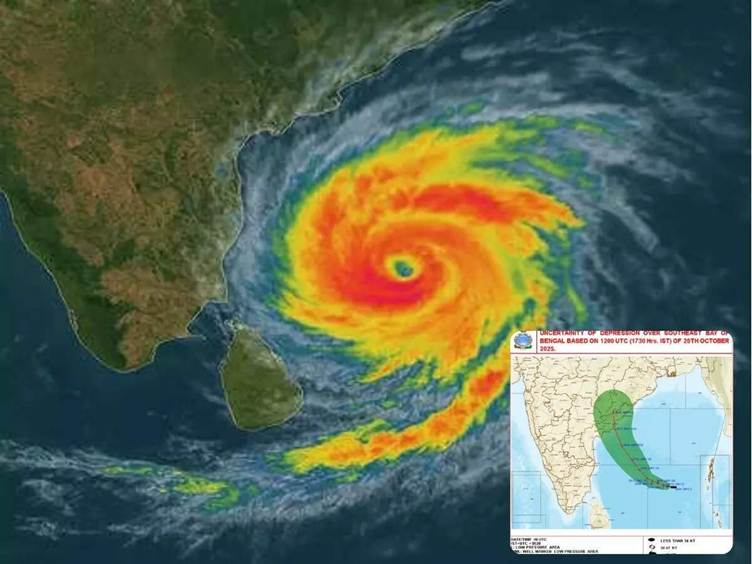
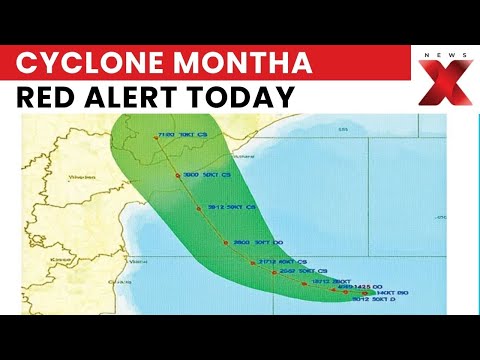
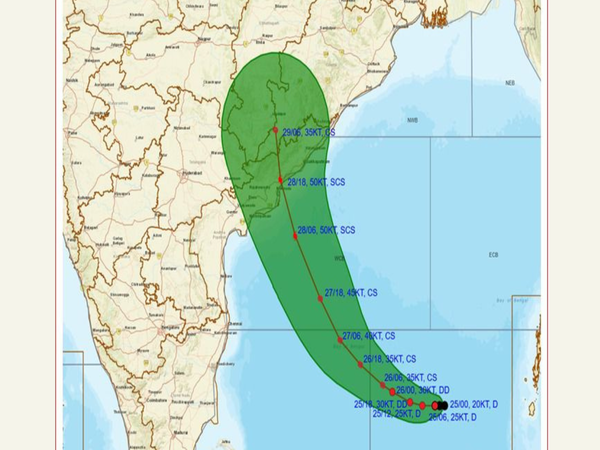
1. Overview & Current Status
The low-pressure system over the southeast and adjoining west-central Bay of Bengal has intensified into a cyclonic storm now named Cyclone Montha. According to the India Meteorological Department (IMD), it is expected to make landfall along the east coast of India, between Machilipatnam and Kalingapatnam (near Kakinada) in Andhra Pradesh during the evening or night of 28 October.
Wind speeds at landfall are expected to be around 90-100 km/h, with gusts reaching up to 110 km/h. States likely to be impacted include Andhra Pradesh, neighbouring coastal Odisha, and parts of Tamil Nadu.
2. Naming & Significance
The storm has been named “Montha” by Thailand, as part of the cyclone-naming list for the North Indian Ocean region. The name means “fragrant flower” or “beautiful flower” in Thai. While the name might evoke gentleness, the reality is quite the opposite—this is a serious weather event with potential for significant disruption.
3. Areas at Risk & Key Warnings
- Andhra Pradesh: The coast is on high alert. Authorities have issued red and orange warnings for many districts.
- Odisha (southern/coastal districts): Ganjam, Gajapati, Rayagada, Koraput etc. are expected to receive heavy to very heavy rainfall; evacuation efforts are underway.
- Tamil Nadu / Northern districts (Chennai region, Tiruvallur, Kancheepuram etc.): Under orange and yellow alerts for heavy rainfall.
4. Preparedness & Evacuations
- Approximately 50,000 people have been evacuated so far as Cyclone Montha intensified
- District administrations in Andhra Pradesh and Odisha have mobilised disaster response teams (NDRF/SDRF/ODRAF) and designated shelters.
- Schools in affected districts have been closed, flights and train services cancelled or diverted in anticipation of the storm.
5. Expected Impacts
- Winds & Storm Surge: With gusts up to ~110 km/h and strong winds, coastal areas may face structural damage, uprooted trees, power outages and storm-surge effects.
- Heavy Rainfall & Flooding: Rainfall could be heavy to very heavy, especially in low-lying and flood-prone areas. Isolated very heavy rainfall (≥ 20 cm) is possible in certain districts
- Sea Conditions & Fishermen Advisory: The sea will be rough. Fishermen have been advised not to venture into the sea till 29 October.
- Transportation & Infrastructure: Disruptions expected in rail, air and road transport; visibility issues due to rain; power lines may go down in wind-prone areas.
- 6. Why This Matters
- The eastern coast of India is vulnerable to cyclonic storms. Even a “moderate” cyclone can lead to large-scale human and economic impact through wind, flooding, and infrastructure damage.
- Timely action (evacuations, warnings) can dramatically reduce casualties and losses, as seen in recent years. The proactive preparations for Montha indicate lessons learned from past storms.
- With changing climate patterns, tropical disturbances may develop faster or intensify more rapidly; staying aware and prepared is crucial.
- For content creators and bloggers (you), this event presents both a public-service need and an opportunity for timely, informative content: disaster preparedness, human-interest stories of resilience, climate change context, etc.
7. What You Should Do / Advise Others
Here’s a checklist that can be adapted for families, communities or content audiences:
- Stay tuned to authentic sources: IMD bulletins, official state disaster management portals.
- Follow evacuation orders if issued. Move early rather than wait until the last minute.
- Avoid low-lying coastal zones, beaches, embankments during the storm.
- Secure loose objects in and around homes; ensure rooftops, windows are safe.
- Charge mobile phones, keep backup power/light sources ready.
- Avoid travelling by road during heavy rain or strong winds; visibility and road conditions may deteriorate fast.
- Do not venture into the sea or engage in coastal activities until the all-clear is given.
- After the storm, beware of downed power lines, contaminated water, flooded roads—do not assume it’s safe until officials declare so.
Final Thoughts
As Cyclone Month approaches, the situation remains dynamic—forecasts may change in intensity, path or timing. What stands out is that prompt institutional preparedness (evacuations, alerts), community readiness and timely communication make a difference. For you as a content creator, this is a moment not just for reporting the storm, but for elevating awareness, offering practical guidance and linking to broader themes like climate resilience.
For more such amazing content visit : https://newseeker.insightsphere.in/







Post Comment