Justice Surya Kant: From Haryana Village to the Chief Justice’s Chair — Track Record & What to Expect
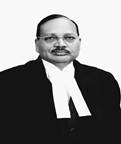
A concise, evidence-backed profile of Justice Surya Kant — his rise from Petwar village in Hisar to the Supreme Court, key judgments and administrative priorities, and what his likely tenure as Chief Justice of India (Nov 2025–Feb 2027) could mean for the judiciary.
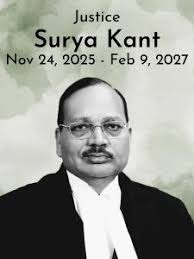
Justice Surya Kant’s expected elevation to Chief Justice of India is the culmination of a steady, 40-year legal journey that began in Petwar village, Hisar, and moved through district courts, High Courts and — since May 2019 — the Supreme Court. If the seniority convention is followed and formal appointment processes proceed as reported, he is slated to take office around 24 November 2025 and will retire on 9 February 2027, giving him a CJI tenure of roughly 14–15 months — long enough to influence administrative reform and case-management priorities.
Early life and legal foundations
Born on 10 February 1962 in Hisar, Haryana, Surya Kant completed his undergraduate studies at Government Post Graduate College, Hisar, took his LL.B. from Maharishi Dayanand University (Rohtak) and began practicing in district courts in 1984 before shifting to the Punjab & Haryana High Court in 1985. His background is often described as humble — schooling in government institutions and early life in an agrarian setting — a narrative that has featured in recent profiles as his elevation draws near.
Career milestones — the steady climb
Justice Kant’s career is a textbook example of steady institutional progression:
- Designated Senior Advocate and then appointed Advocate General of Haryana (July 2000–Jan 2004).
- Elevated as a Permanent Judge of the Punjab & Haryana High Court on 9 January 2004, serving there for over 14 years.
- Appointed Chief Justice of the Himachal Pradesh High Court on 5 October 2018 and then elevated to the Supreme Court on 24 May 2019.
Those dates matter: seniority in the Supreme Court determines the line of succession to the CJI’s post. Given Justice B.R. Gavai’s retirement date (23 Nov 2025) and official recommendations reported in the press, Surya Kant’s appointment follows the established convention.
Judicial philosophy and notable work
Across his High Court and Supreme Court tenures, Justice Surya Kant has repeatedly engaged with issues that sit at the intersection of constitutional safeguards and ground-level rights. As a High Court judge he delivered decisions that touched on prisoners’ rights (including welfare and rehabilitative aspects), protections for local water bodies and public utilities, and procedural fairness in criminal cases. On the bench in the Supreme Court he has been part of panels handling criminal appeals, constitutional questions and administrative law matters. His judgments reflect a blend of textual constitutionalism and pragmatic concern for access to basic rights.
Administrative record & public-facing initiatives
Beyond judgments, Justice Kant has participated in legal-services expansion and access initiatives — roles tied to his ex-officio responsibilities, including work connected with the National Legal Services Authority (NALSA). Observers note his interest in judicial efficiency: reducing pendency, encouraging alternate dispute resolution, and improving legal-aid outreach. Such administrative priorities are often the levers a CJI uses to shape the court’s daily functioning.
What his CJI tenure could mean
A 14–15 month tenure is substantial in today’s context (where many CJIs serve only a few months). That window gives Justice Kant practical room to:
- Recalibrate roster and case-management priorities to accelerate disposal of long-standing matters.
- Push for expansion of legal-aid and pro-bono schemes, in line with his NALSA-linked work.
- Encourage mediation and alternate dispute resolution to unclog commercial and civil dockets, while protecting fundamental-rights jurisprudence through careful constitutional benches where needed.
Caveats & public scrutiny
Every high judicial elevation invites scrutiny. Media outlets have reported background checks, debates and occasional critical coverage — reminders that public perception matters for legitimacy even when appointments follow convention. When using such reports in public-facing pieces, distinguish between verifiable facts (dates, offices held, judgments authored) and opinion or unproven allegations. Wikipedia+1
Bottom line
Justice Surya Kant’s rise — from Petwar village to the Supreme Court — underscores an institutional pathway where long High Court service, administrative experience (Advocate General; Chief Justice of a High Court) and seniority converge. If he becomes Chief Justice on or about 24 November 2025, his roughly 14–15 month tenure presents a realistic opportunity to enact administrative reforms, bolster access to justice measures, and leave a distinct imprint on the court’s handling of pendency and public-interest cases. For readers tracking India’s judiciary, his CJI term will be one to watch for pragmatic administrative changes and continuity in constitutional adjudication.
For more such amazing content visit : https://newseeker.insightsphere.in/







Post Comment