Lessons to Be Learned from Prashant Kishor’s Jan Suraaj Party Loss in the Bihar Election.
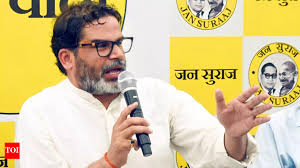
Analysis:
- Prashant Kishor’s Jan Suraaj Party loss in the Bihar election stands as one of the most important political case studies of recent times because it reveals the gap between political strategy and political execution. Kishor, known across India as the mastermind behind the victories of several major parties, carried high expectations. However, the electoral outcome clearly showed that his national reputation did not guarantee that Bihar’s ground reality would align with his strategic vision.
- The first major lesson is that popularity and national recognition do not automatically convert into electoral support. Voters in Bihar knew Prashant Kishor as a sharp political strategist, but they did not view him yet as a grassroots leader who represents their emotional needs. While admiration for his intelligence was widespread, political trust requires years of local connection, which Jan Suraaj had not yet developed.
- The Jan Suraaj initiative generated mass enthusiasm, especially among youth and urban observers, but enthusiasm alone is not equal to votes. People attended PK’s padyatras, listened to his speeches, and agreed with his arguments, yet they did not uniformly walk to polling booths with the resolve to vote for his symbol. Movements can inspire people, but turning that inspiration into consistent electoral support requires a much stronger organisational foundation.
- Jan Suraaj failed to convert its crowd-based movement into a booth-based political machine. Bihar’s politics is heavily dependent on booth-level networks where every voter is influenced by local leaders, caste networks, and long-term relationships. Parties like RJD, BJP, and JDU have deep roots with micro-workers in each panchayat. Jan Suraaj’s young volunteers lacked that depth and long-term village presence, which significantly weakened their polling-day performance.
- Bihar continues to be one of India’s most caste-driven political states, and ignoring caste arithmetic can be fatal for any new party. Kishor talked about development, governance, health, education, corruption, and administrative reform, but voters still preferred to vote along caste lines. Without a solid caste base—whether Yadav, Kurmi, upper-caste, EBC, Mahadalit, or Muslim—Jan Suraaj failed to build a loyal voting block.
- Voters in Bihar appreciated the good-governance approach but doubted whether a brand-new party without administrative experience could deliver stability. Many feared that choosing a newcomer could lead to uncertainty. This shows that even voters who support transformation still prefer parties with an established track record, especially in states where governance transitions tend to be turbulent.
- Prashant Kishor’s technocratic and analytical image became a double-edged sword. Voters respected him but did not feel a deep emotional connection. Indian politics, especially in Bihar, requires leaders who evoke sentiment, not just admiration. Lalu Prasad Yadav and Nitish Kumar built emotional connect over decades; PK, in comparison, appeared too rational and policy-driven, which alienated some segments.
- The Jan Suraaj cadre, though energetic and sincere, lacked political experience. Many were first-time volunteers or students who were passionate but untrained in the art of booth management, caste negotiations, conflict resolution, and local power balancing. Elections require micro-management on every street, but Jan Suraaj lacked seasoned local leaders who could influence opinion at the household level.
- Digital reach, though impressive, did not translate into rural electoral strength. PK’s speeches went viral on YouTube, and his ideas were widely circulated online, but Bihar’s elections are still fought primarily in villages, tea stalls, panchayat meetings, community gatherings, and caste clusters—not on digital platforms. Jan Suraaj’s WhatsApp penetration and grassroots social media ecosystem were weaker than competing parties.
- PK’s anti-system, anti-traditional political stance appealed to young voters but generated anxiety among older, more conservative voters. Many elderly voters prefer safety and stability. PK’s aggressive tone against the existing governance system created doubts regarding whether he could maintain smooth administration. This fear of unpredictability discouraged a sizeable portion of voters from supporting Jan Suraaj.
- The timeline of the party’s formation also worked against it. Most successful political organisations spend years building their grassroots base before entering elections. Jan Suraaj’s groundwork was barely two to three years old, which is not enough in a state where political loyalties run deep across generations. Many rural voters encountered Jan Suraaj volunteers for the first time only during election months, weakening the credibility of the party.
- Even though PK conducted a long padyatra across Bihar, the movement did not have enough time to penetrate every village. Bihar has over 45,000 villages, and no amount of travel can replace consistent, long-term engagement. The number of areas touched by padyatras was impressive, but not enough to counter the decades-old presence of established parties.
- Alliances—or the lack of them—played a decisive role in Jan Suraaj’s poor performance. Bihar’s political system is heavily coalition-based, and parties that contest alone suffer greatly because caste-based vote transfers occur primarily through alliances. Jan Suraaj fought solo, and without strong partners, its vote share fragmented across regions instead of consolidating in winnable clusters.
- PK did not project additional strong leaders within the party. In Indian politics, especially during elections, a party needs multiple faces—local leaders, district leaders, caste group leaders, and strong constituency-specific figures. Jan Suraaj placed most of its identity on Kishor alone, and this over-centralisation prevented the party from developing wider emotional resonance among different communities.
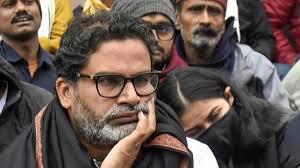
- The loss highlights that data, analytics, and strategy—although incredibly useful—cannot replace the human element of politics. Elections are not won through planning alone; they are won through relationships, emotional bonding, caste negotiations, and local micro-management that spans years, not months.
- Jan Suraaj’s door-to-door outreach was insufficient compared to the massive and well-structured systems of RJD, BJP, and JDU. These parties have workers who personally know families, resolve disputes, coordinate schemes, attend weddings and funerals, and maintain everyday presence. Jan Suraaj volunteers, being new, could not replicate such intimate community engagement.
- The absence of a strong narrative beyond governance also impacted the campaign. PK focused heavily on developmental issues, but Bihar’s political culture is shaped by emotional storytelling, caste identity, historical loyalty, and personality-driven politics. Jan Suraaj’s narrative did not emotionally captivate the core voting groups.
- Many voters believed PK might eventually join hands with a major party or switch sides, given his past image as a consultant rather than a lifetime political leader. This perception weakened voter confidence. People prefer leaders they believe will stay long-term; doubt reduces loyalty.
- Traditional parties also heavily capitalised on the fear that voting for Jan Suraaj could “waste” the vote. Rivals suggested that choosing a new party would only divide anti-incumbency votes or destabilise existing caste power balances. Such narratives are powerful in rural politics, and Jan Suraaj lacked strong rebuttals on the ground.
- The loss of Jan Suraaj underscores that Bihar’s political field is extremely competitive, saturated, caste-fragmented, and deeply influenced by historical loyalties. Breaking into such a dense ecosystem requires patience, alliances, relentless grassroots work, emotional symbolism, consistent messaging, and a long-term plan extending beyond multiple election cycles. PK’s party, although structurally promising, needed more time, more leaders, more caste partners, more booth-level strength, and more emotional connection to transform admiration into votes. The 2024 Bihar election results do not end Jan Suraaj’s political journey; they simply highlight the immense groundwork required to succeed in a complex electoral landscape like Bihar.
- FAQ
- 1. Why did Prashant Kishor’s Jan Suraaj Party lose the Bihar election?
Jan Suraaj lost mainly due to weak party structure, lack of caste consolidation, limited grassroots organization, and low voter trust in a new political alternative. - 2. Was Prashant Kishor’s personal popularity not enough to win seats?
No. PK’s individual image helped in visibility but could not convert into votes because elections in Bihar are driven more by caste equations, alliances, and booth-level networks. - 3. Did Jan Suraaj have enough time to prepare for the election?
Not really. Building village-level committees, securing loyal cadres, and creating a statewide network generally requires 4–6 years, which Jan Suraaj didn’t have fully. - 4. What was the biggest strategic mistake made by Jan Suraaj?
The absence of strong alliances and the unrealistic expectation that a new party could break established caste-based voting patterns quickly. - 5. Could Jan Suraaj have performed better with a coalition?
Yes. A strategic alliance with smaller regional groups or independents might have boosted vote share and improved credibility among cautious voters. - 6. What lessons can new political parties learn from Jan Suraaj’s defeat?
They must invest heavily in booth-level workers, build social coalitions, avoid over-reliance on personality politics, and enter elections only when the grassroots network is mature. - 7. Will Prashant Kishor and Jan Suraaj try again in the next Bihar election?
Very likely. PK sees Jan Suraaj as a long-term movement, not a one-time experiment, so the party may return with stronger organization and wider alliances. - 8. Did caste politics overshadow Jan Suraaj’s development agenda?
Yes. Traditional caste loyalties in Bihar played a major role and significantly reduced the impact of Jan Suraaj’s development-driven campaign. - 9. What can Prashant Kishor do differently next time?
Strengthen cadres, focus on region-wise leadership, work with social coalitions, communicate clearer promises, and become more visible in local issues year-round. - 10. Is Jan Suraaj still relevant after the electoral defeat?
Yes. Defeat does not end relevance. If the movement continues working at the grassroots and refines strategy, it can still become a strong political force over time.







Post Comment