Sonprayag to Kedarnath Ropeway Approved: 12.9 km 3S Cable Car to Cut 9-Hour Trek to 36 Minutes | Cost, Timeline & Benefits

Government approves ₹4,081.28 crore ropeway from Sonprayag to Kedarnath under Parvatmala. 12.9 km, 3S gondola tech, cuts trek from 8-9 hours to 36 minutes. Adani awarded, 4-6 years build time. Key details, safety, employment & revenue projections.
The Indian government recently approved a game-changing infrastructure project: a 12.9-kilometre ropeway between Sonprayag and Kedarnath in Uttarakhand. Approved in March 2025 under the Parvatmala Pariyojana / National Ropeways Development Programme, this ropeway promises to reduce the time and hardship pilgrims face when travelling the trek from Sonprayag to Kedarnath. It uses modern 3S gondola technology and is being built under a public-private partnership. Here’s everything we know so far: cost, timeline, who’s building it, the need, benefits, safety, projected revenue and employment.
Key Details: What, Where & Who
| Feature | Detail |
| Route / Length | From Sonprayag to Kedarnath, 12.9 km. |
| Altitude | The Kedarnath shrine sits at about 3,583 metres above sea level. |
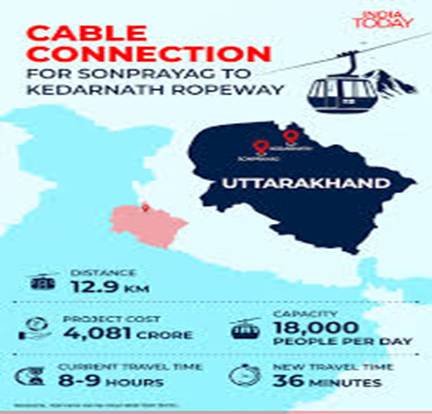
| Cost / Investment | Approx ₹4,081.28 crore for the Sonprayag-Kedarnath ropeway. |
| Model | Public-Private Partnership (PPP), under DBFOT (Design, Build, Finance, Operate & Transfer) model. |
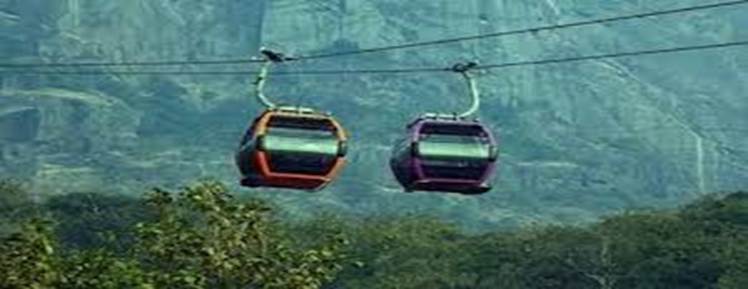
| Technology | Tri-cable Detachable Gondola (3S) technology, capable of higher stability in wind, more capacity, better comfort. |
| Capacity | 1,800 passengers per hour in each direction. Daily capacity up to ~18,000 passengers. |
| Contractor / Operator | Adani Enterprises Ltd (AEL) has been awarded the Letter of Award (LoA) by National Highways Logistics Management Ltd (NHLML). AEL’s “Roads, Metro, Rail & Water (RMRW)” division will execute. |
Timeline: When Will It Start & Complete
- The project was formally approved by the Union Cabinet / CCEA in March 2025.
- Construction period is expected to be 4-6 years.
- After construction, Adani will operate the ropeway (for a period – e.g. 29 years) under the PPP arrangements.
So, if everything progresses smoothly, the ropeway may be operational around 2029-2031.
Why This Project Was Needed
- Reduce Travel Time & Physical Strain: The current route from Sonprayag (or Gaurikund) to Kedarnath involves 8-9 hours of trekking or combinations of walking, pony / palanquin / helicopter. With this ropeway, that is expected to come down to about 36 minutes.
- Pilgrim Safety & Comfort: Many pilgrims are elderly, disabled, or under-prepared for high altitude and rough terrain. Better infrastructure helps reduce risks (weather, fatigue, health). Also helps in monsoon / bad weather when trek paths may get dangerous.
- Boost Tourism & Local Economy: Kedarnath is one of the 12 Jyotirlingas, dense with tourist & pilgrimage traffic during the 6-7 months open season (from Akshaya Tritiya – April/May to Diwali / October/November).
Better access means more visitors, more spending in local businesses (lodging, food, transport, guiding). - Environmental / Ecological & Sustainable Transport Considerations: Ropeway tends to be less harmful than constructing / maintaining roads in fragile mountain terrain, less soil erosion, fewer landslide risks in certain segments, and less vehicular pollution along trek paths.
Time & Other Savings
- Trek Time Reduction: From ~8–9 hours to just 36 minutes for the Sonprayag → Kedarnath stretch.
- Daily Pilgrim Throughput: Up to 18,000 pilgrims per day, significantly more than current capacity over the trekking route and support services.
- Seasonal Dependence: The trek is feasible only in 6-7 months due to weather. The ropeway may provide more reliable access during some marginal periods.
Safety & Environmental Considerations
- Use of 3S technology improves stability in high wind, better safety in adverse weather.
- Reduced human strain, fewer accidents on treks, less risk of falls, altitude sickness, etc.
- Environmental impact assessments (EIAs) will be required; the terrain is fragile, prone to landslides, snowfall, etc. Care will need to be taken for minimal habitat disturbance, water sources, forest cover.
- ERM & disaster-management planning (avalanche, storms) will need to be built in.
Expected Revenue & Financial Viability
While exact revenue projections have not been publicly detailed yet (in the sources as of now), we can make educated estimates / indicators based on known data:
- With daily capacity of ~18,000 passengers, even if a conservative portion uses the ropeway (say 50-60%), revenue from ticketing could be substantial.
- Additional revenue from ancillary services: food, lodging, shops, parking, transport to start point, etc.
- Under PPP DBFOT model, operator (Adani) will likely share revenue with the government entity (NHLML) over the concession period (29 years of operations after build, per reports).
- Payback period depends on ticket rates, operational costs, maintenance, and seasonality. Since pilgrim numbers are already large (around 20 lakh per season to Kedarnath) this creates a large base.
Employment (Rozgar) & Local Benefits
- Construction Phase Jobs: Building such a large ropeway over difficult mountain terrain will require engineers, construction workers, skilled technicians, installation teams, safety staff, etc. Thousands of jobs during 4-6 year period.
- Operation Phase Jobs: Ropeway operators, maintenance crews, safety & monitoring personnel, ticketing & administrative staff; allied service staff (in hospitality, transport).
- Indirect Employment: Local hotels, shops, guides, transporters, food vendors, rental shops etc. All stand to gain from increased pilgrimage traffic.
- Community Upliftment: More reliable connectivity may lead to better availability of goods, improved supply chain, improved emergency access (medical, evacuation), etc.
Who Benefits & Broader Impacts
- Pilgrims: Easier, safer, faster access. Especially helpful for elderly, disabled, children.
- Local Population: More livelihood opportunities, improved local infrastructure, better connectivity.
- Tourism Sector: Uttarakhand’s image improved, more tourists, especially those unable to do strenuous treks.
- Ecology / Environment: If managed well, lesser pressure on trails / fragile terrain, less need for animals / helicopters etc.
- State / Central Governments: Revenue generation, taxes, economic growth, regional development.
Key Challenges & Considerations
- Ensuring environmental approvals & minimizing impact on Himalayas’ fragile ecosystem.
- Maintaining safety in bad weather, storms, snowfall, etc.
- Managing seasonal demand: peak pilgrimage season vs off-season; maintaining operations to be cost-effective.
- Ticket pricing and affordability: balancing cost recovery with pilgrim affordability.
- Infrastructure on both ends: access roads, last-mile connectivity, lodging, sanitation, medical facilities.
When Will Work Actually Begin?
- As of September 2025, Adani Enterprises has received the LoA and will begin work.
- Given the 4-6 year construction window, groundwork likely beginning in the coming months (after tendering, surveys, clearances). Real construction may pick up in 2026.
Projected Completion & Operational Date
- Likely 2029-2031 for public operations, assuming no major delays.
Revenue Sharing, Concession Period, and Long-Term Returns
- Adani will operate the ropeway for 29 years after completion under the PPP model. www.ndtv.com
- Revenue will come from ticket fares, possibly premium services, plus non-fare revenue (shops, food, parking etc.).
- Government likely to receive a share of revenue or lease payments as per DBFOT contract.
Conclusion
The Sonprayag-to-Kedarnath ropeway is a transformational project for pilgrimage infrastructure in Uttarakhand. With ~₹4,081 crore investment, modern technology, drastically reduced travel time, and wide social & economic benefits, it has the potential to ease one of the most difficult treks in India. If environmental and safety aspects are well managed, this could be a flagship for sustainable mountain tourism.
For more such amazing content visit : https://newseeker.insightsphere.in/






Post Comment