Youngest and Oldest Nobel Prize Winners in History: The Extremes of Human Achievement
🕊️ Introduction: The Nobel Legacy That Defines Greatness
Since its inception in 1901, the Nobel Prize has stood as the world’s most prestigious recognition of human excellence in fields such as Physics, Chemistry, Medicine, Literature, Peace, and Economics.
While most recipients are seasoned scholars and scientists, a few have defied age barriers — proving that wisdom has no expiry date and courage has no minimum age.
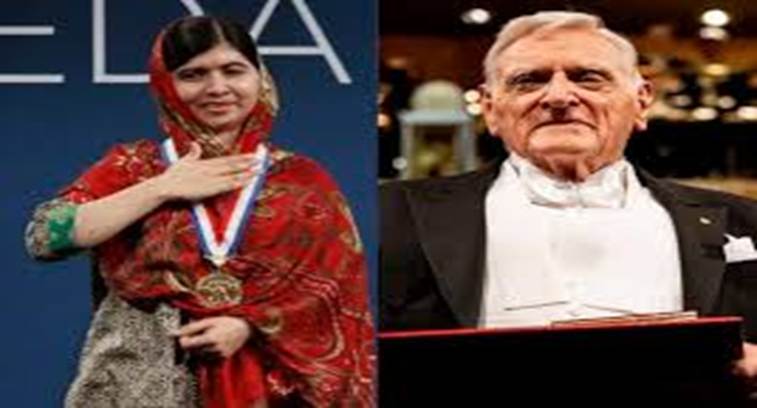
Among the 900+ Nobel laureates, two names shine at opposite ends of the age spectrum:
- Malala Yousafzai, the youngest Nobel Prize winner ever, who received the Nobel Peace Prize at just 17 years old.
- John B. Goodenough, the oldest Nobel Prize winner, who earned the Nobel Prize in Chemistry at 97.
Their stories showcase how brilliance, whether nurtured early or expressed late, can reshape humanity’s future.
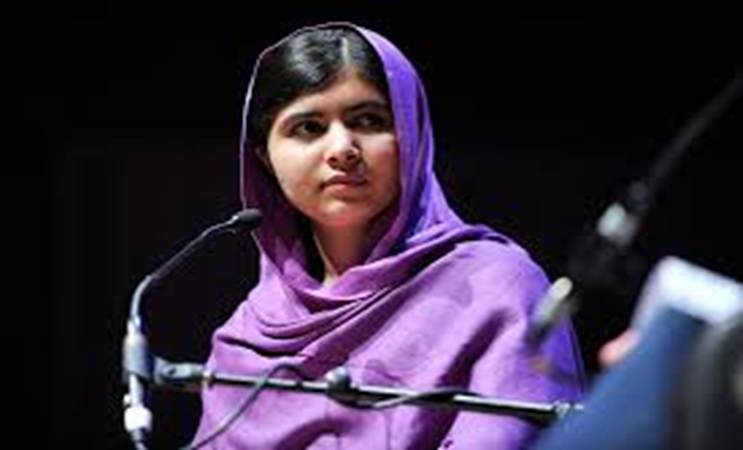
🌸 Malala Yousafzai – The Youngest Nobel Prize Winner in History
Age at Winning: 17 years (in 2014)
Category: Nobel Peace Prize
Country: Pakistan
Award Shared With: Kailash Satyarthi (India)
🌍 The Girl Who Spoke Up for Millions
Malala Yousafzai’s story is not just about education; it’s about defiance in the face of fear. Born in Mingora, Swat Valley, Pakistan, Malala grew up in a region where the Taliban banned girls from attending school. At a young age, she began blogging anonymously for the BBC under the name “Gul Makai,” sharing her life under Taliban rule.
Her activism made her a symbol of resistance, but also a target. In October 2012, at the age of 15, Malala was shot in the head by Taliban gunmen while returning home from school. Miraculously, she survived and refused to be silenced.
📖 Her Journey from Recovery to Revolution
After months of medical treatment in the UK, Malala continued her mission. She founded the Malala Fund, an organization advocating for girls’ right to education worldwide.
Her speech at the United Nations in 2013 became iconic — especially her words:
“One child, one teacher, one book, one pen can change the world.”
In 2014, Malala Yousafzai became the youngest Nobel laureate in history. The Nobel Committee recognized her for her “struggle against the suppression of children and young people and for the right of all children to education.”
💬 Impact and Legacy
Malala’s influence extends far beyond her age or background. She became:
- A global symbol of courage and educational equality.
- An author, with her memoir “I Am Malala” translated into over 40 languages.
- An Oxford graduate, proving that activism and education can coexist powerfully.
Today, she continues to inspire millions through her speeches, advocacy, and Malala Fund projects in countries like Nigeria, Afghanistan, and India.
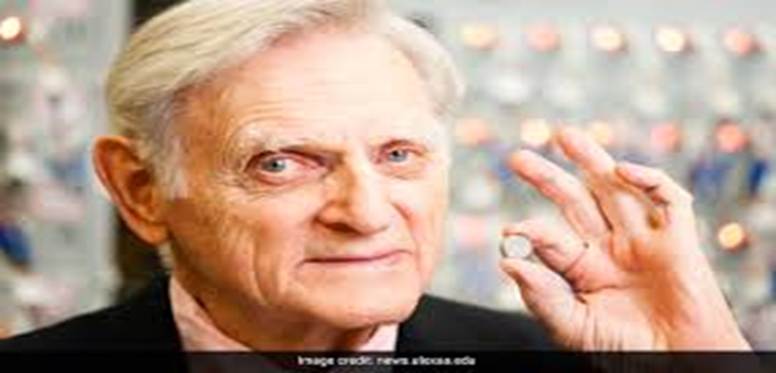
⚛️ John B. Goodenough – The Oldest Nobel Prize Winner in History
Age at Winning: 97 years (in 2019)
Category: Nobel Prize in Chemistry
Country: United States
Award Shared With: M. Stanley Whittingham and Akira Yoshino
🔋 The Man Who Powered the Modern World
While Malala fought for education, John B. Goodenough revolutionized energy storage.
Born in 1922, Goodenough’s scientific journey was marked by persistence, curiosity, and innovation. In 2019, at 97 years old, he became the oldest Nobel Prize laureate ever, honored for his work in developing the lithium-ion battery — the power source behind almost every smartphone, laptop, and electric vehicle today.
🔬 The Science That Changed Everything
Goodenough’s breakthrough came in the late 1970s and 1980s when he developed a cobalt oxide cathode, enabling rechargeable lithium-ion batteries to store more energy safely.
This invention transformed modern life — making portable electronics, renewable energy storage, and electric vehicles possible.
What’s fascinating is that Goodenough continued his research well into his 90s, exploring solid-state batteries for a cleaner energy future.
🧠 A Lifetime of Learning
Before his chemistry fame, Goodenough served in World War II, studied mathematics at Yale, and earned a Ph.D. from the University of Chicago under the mentorship of renowned physicists. His career spanned institutions like MIT, the University of Oxford, and the University of Texas at Austin.
His humility shone through his famous quote:
“Don’t worry about the prizes and the recognition. Worry about the science — and the rest will follow.”
🌟 Legacy Beyond Age
John B. Goodenough passed away in 2023 at the age of 100, leaving behind an unparalleled scientific legacy. His discovery made the green energy revolution possible and laid the foundation for a sustainable technological future.
His life proves that age is never a limit to making meaningful contributions. True innovation, he demonstrated, is driven not by youth or time but by passion and purpose.
🔍 Comparing the Two Extremes: Youth vs. Experience
| Attribute | Malala Yousafzai | John B. Goodenough |
| Age at Award | 17 years | 97 years |
| Field | Peace | Chemistry |
| Nationality | Pakistani | American |
| Contribution | Education activism & girls’ rights | Lithium-ion battery invention |
| Legacy | Symbol of hope & equality | Architect of modern energy |
| Lesson | Courage knows no age | Learning never stops |
Together, their achievements tell a timeless truth — that human potential is ageless.
💡 Interesting Nobel Age Facts You Might Not Know
- The average age of Nobel winners is around 59 years.
- Only 2% of Nobel laureates were under 30 when they won.
- Several laureates, including Albert Einstein, made their breakthroughs early but received the prize years later.
- The Nobel Prize has been awarded more than 600 times across categories since 1901.
- A few laureates — like Marie Curie and Linus Pauling — have won multiple Nobel Prizes.
These facts show how diverse and dynamic the Nobel community truly is.
✨ Lessons from Both Legends
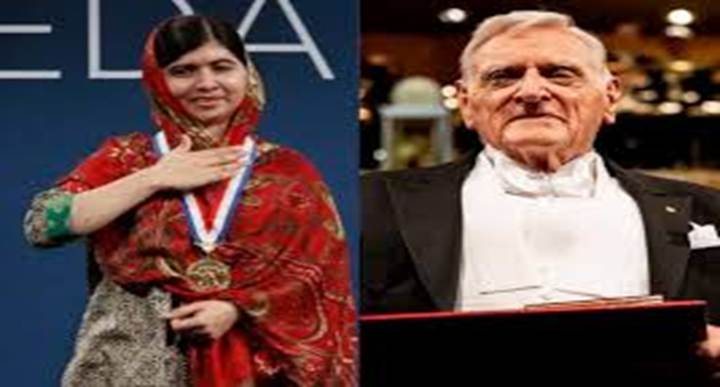
Both Malala and Goodenough teach us essential lessons:
- Courage and conviction matter more than age.
- Every phase of life offers potential for greatness.
- Real change begins when you use your skills for the greater good.
Malala inspires youth to speak up and fight injustice, while Goodenough motivates older generations to keep learning and innovating.
Their paths may differ, but their message aligns — humanity thrives on passion, not years.
🏁 Conclusion: Age is Just a Number When Purpose is Strong
From a teenage activist fighting for girls’ education to a 97-year-old scientist shaping the energy future, the youngest and oldest Nobel Prize winners represent the full spectrum of human brilliance.
Their achievements remind us that the mind’s capacity for greatness never expires — and the world’s progress depends on both youthful energy and lifelong wisdom.
As the Nobel legacy continues, their names — Malala Yousafzai and John B. Goodenough — will forever stand as proof that every age is the right age to change the world.
❓ Frequently Asked Questions (FAQ)
🏅 1. Who is the youngest Nobel Prize winner in history?
The youngest Nobel Prize winner ever is Malala Yousafzai, who received the Nobel Peace Prize in 2014 at just 17 years old. She was honored for her courageous fight for girls’ right to education in Pakistan and around the world.
⚛️ 2. Who is the oldest Nobel Prize winner in history?
The oldest Nobel Prize winner is John B. Goodenough, who received the Nobel Prize in Chemistry in 2019 at the age of 97. His groundbreaking work led to the development of the lithium-ion battery, which powers most of today’s mobile devices and electric vehicles.
🌍 3. How many people have won the Nobel Prize so far?
Since 1901, more than 900 individuals and organizations have received Nobel Prizes across six main categories — Peace, Literature, Physics, Chemistry, Physiology or Medicine, and Economic Sciences.
🎓 4. What did Malala Yousafzai do to win the Nobel Prize?
Malala fought against the Taliban’s ban on girls’ education in Pakistan’s Swat Valley. Even after surviving an assassination attempt in 2012, she continued her activism, giving powerful speeches and founding the Malala Fund to promote education globally.
🔋 5. What was John B. Goodenough’s Nobel-winning invention?
John B. Goodenough co-invented the lithium-ion battery, which revolutionized portable electronics and clean energy storage. His discovery paved the way for technologies like smartphones, laptops, and electric vehicles.
🕊️ 6. Are there any other young Nobel Prize winners?
Yes. Some other young laureates include Lawrence Bragg, who won the Nobel Prize in Physics at age 25, and Werner Heisenberg, who won it at age 31. However, Malala Yousafzai remains the youngest ever.
👩🔬 7. Can someone lose their Nobel Prize?
Technically, no Nobel Prize can be revoked once awarded. However, recipients can refuse or return the prize voluntarily — like Boris Pasternak, who declined the 1958 Nobel Prize in Literature under political pressure.
📚 8. What is the average age of a Nobel Prize winner?
The average age of Nobel laureates is around 59 years, though it varies by category. Scientists tend to win later in life, while peace activists and writers often receive it younger.
💰 9. How much money does a Nobel Prize winner receive?
As of 2024, each Nobel Prize comes with a monetary award of 11 million Swedish kronor (approximately $1 million USD), a gold medal, and a diploma.
🧠 10. What lesson can we learn from the youngest and oldest Nobel winners?
Their stories teach us that age is not a barrier to greatness. Malala Yousafzai’s courage and John B. Goodenough’s lifelong dedication both prove that passion and purpose matter far more than years.
For more such amazing content visit : https://newseeker.insightsphere.in/





Post Comment